Gutter Installation and Repair: Protecting Your Foundation
When rain hits your roof, where does it go? For many property owners, the answer is: right into the heart of trouble—unless your gutters and downspouts are in top shape. At Milano Roma Roofing, we’ve seen firsthand how neglected gutters silently wreak havoc on homes and commercial buildings alike. Foundation cracks. Basement leaks. Water-stained siding. The aftermath is never pretty.
Acting early can save you thousands. Whether you’re a homeowner or manage a business property, understanding how gutters protect your investment is as important as regular roof inspections or storm damage restoration near you.
Why Gutters Matter for Your Property 🏠
Think of gutters as the silent sentinels of your building. Their job? Catching every drop of rain and steering it safely away from your foundation. Without them, water pools around your base—soaking the soil, seeping into walls, and eventually eroding the very bones of your property.
- Foundation Protection: Persistent runoff erodes soil and creates pressure on basement walls, leading to cracks and leaks.
- Prevents Mold & Rot: Redirected water keeps crawlspaces and basements dry, minimizing mold risk.
- Shields Landscaping: Overflowing gutters wash away garden beds and erode walkways.
- Structural Longevity: Gutters and downspouts preserve siding, brickwork, and even your roof deck.
Don’t underestimate the domino effect. A single clogged gutter can lead to a flooded basement or costly structural repair. Roof flashing, chimney flashing, and even decking are all at risk when gutters fail.
Signs Your Gutters Need Repair
How do you know if your gutter system is trying to tell you something? Here are the most common red flags:
- Sagging or Detached Gutters: Fasteners have failed or wood has rotted.
- Visible Rust or Cracks: Water escapes before reaching the downspout.
- Stains on Siding or Foundation: Overflow is causing splashback.
- Pools of Water Near Foundation: Downspouts may be blocked or improperly installed.
- Plant Growth: If you see weeds or moss sprouting, it’s time for a gutter cleaning.
If you notice any of these, don’t wait for the next downpour. The longer you ignore the symptoms, the greater the risk to your property’s structure.
Step-by-Step Gutter Installation
Installing gutters isn’t just about attaching some metal to your eaves and calling it a day. Proper installation is the difference between a dry basement and a flooded one.
1. Planning and Measuring
Start by measuring all roof edges where water will flow. Factor in the number of downspouts—at least one every 40 feet for optimal drainage according to the International Residential Code (IRC). Sketch it out. It’s like building a roadmap for rain.
2. Slope Matters
Gutters must slope toward the downspout. The rule of thumb: a minimum drop of 1/4 inch for every 10 feet. Too flat? Water stands still and breeds mosquitoes. Too steep? Water rushes past debris, leaving clogs in its wake.
3. Mounting Brackets
Install brackets every 24–36 inches. Solid anchoring prevents sagging during heavy storms—a must for storm damage restoration near you.
4. Sealing Seams
Apply high-grade, roofing-compatible sealant at all joints and end caps. Double-check for leaks with a hose test before calling it done.
5. Downspout Placement
Downspouts need to shoot water at least three feet away from the foundation, using splash blocks or extenders if necessary. For commercial buildings, consider underground drains.
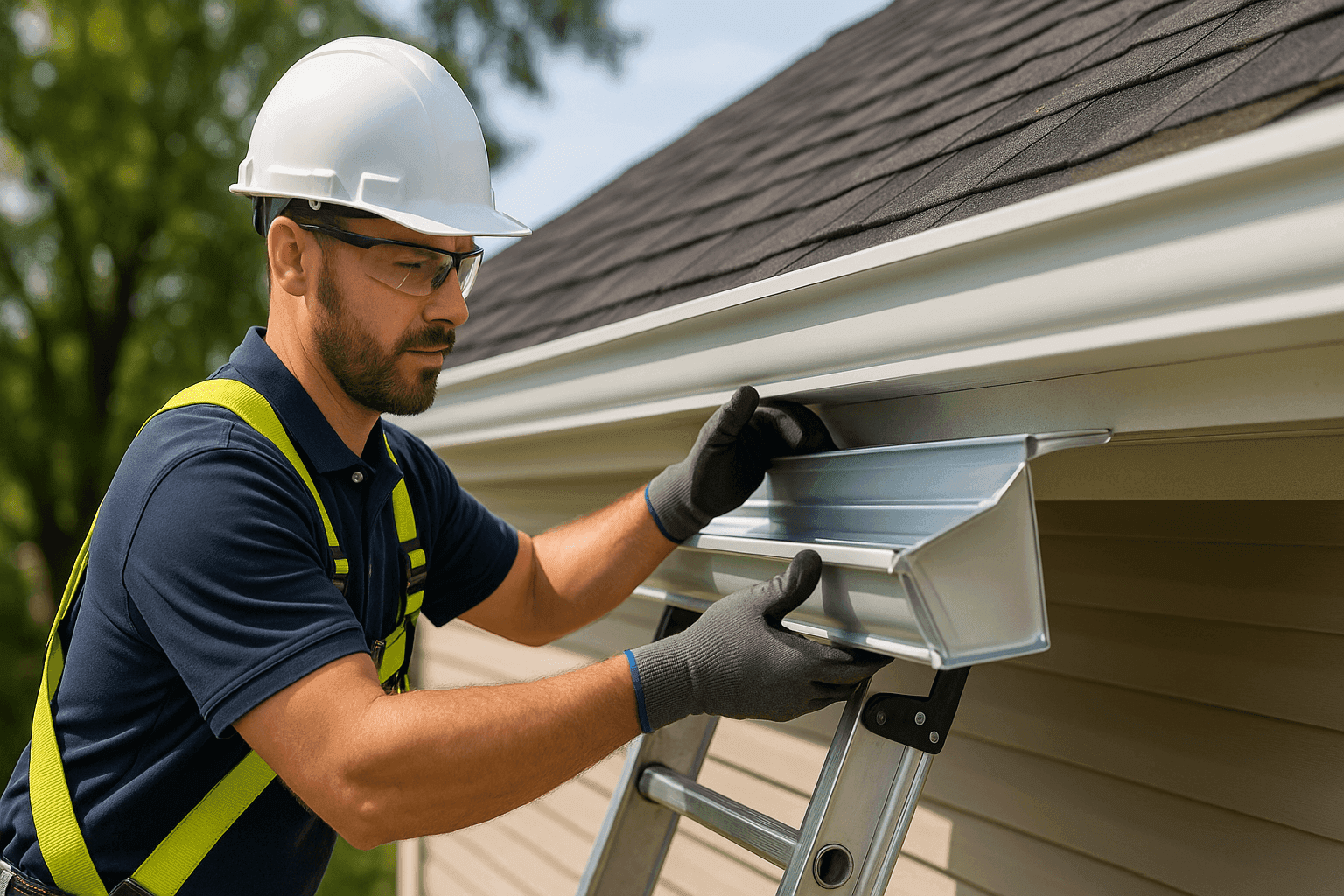
Safety Tip: Always wear gloves and eye protection. Ladders should be placed on level ground, and OSHA guidelines recommend a second person when working above six feet.
When to Replace vs. Repair Gutters
Sometimes a patch-up will do. Other times, it’s like taping a cracked dam. Here’s how to tell:
Repair
- Minor leaks at seams
- Small rust spots
- Isolated sagging (brackets can be replaced)
- Clogs or blockages
Replace
- Large sections pulling away
- Multiple cracks or holes
- Severe rust, corrosion, or pitting
- Gutters are undersized for your roof area
If you find yourself repairing the same spot more than once a season, it’s time to invest in a new system. Modern options—like seamless aluminum, steel, or even eco-friendly materials—can handle tougher storms and require less maintenance.
Tips for Gutter Upkeep
Routine maintenance is your best defense. Here’s what you can do:
- Clear Debris: Clean gutters at least twice a year, more often if you have tall trees nearby.
- Check Sloping: Water should move freely toward downspouts. If not, rehang the section.
- Inspect After Storms: Look for new dents, debris, or detachment.
- Flush Downspouts: Use a hose to ensure full flow. A clogged downspout can send water backward, flooding your eaves and roof deck.
- Seal Leaks Immediately: Small leaks become big problems fast. Use roofing sealant compatible with your gutter material.
DIY or Hire a Pro?
Feeling handy? Basic cleaning and minor repairs are within reach for most homeowners. But there are times when experience matters:
- Complex Rooflines: Multi-story buildings or steep roofs require special equipment and safety know-how.
- Recurrent Leaks or Sagging: These may stem from underlying roofing or flashing issues.
- Commercial Properties: Building codes and insurance requirements often demand certified installation.
Remember, working at heights carries real risks. If you’re unsure, don’t gamble with your safety—or your foundation.
Professional Gutter Services: What to Expect on Arrival
When Milano Roma Roofing arrives, here’s what happens:
- Full system inspection (gutters, downspouts, flashing, and roof edges)
- Detailed assessment of problem areas, including interior checks for water intrusion
- Recommendations for repair, replacement, or upgrades based on your property’s unique needs
- Use of code-compliant materials and fasteners for lasting results
We take the guesswork out so you can focus on what matters—protecting your investment.
Foundation Damage: The Hidden Cost of Damaged Gutters
Ignoring gutter issues is like letting a leaky faucet drip for years. Small problems add up, and before you know it, you’re facing:
- Cracked, shifting, or buckling foundations
- Mold and mildew in basements or crawlspaces
- Damaged insulation, walls, and flooring
- Increased pest activity (mosquitoes love standing water)
According to the American Society of Home Inspectors, water damage is the most common cause of foundation failure. Gutters are your first line of defense.
Emergency Gutter Repairs
Storm just rolled through and your gutters are hanging by a thread? Don’t wait. Emergency services are sometimes the only thing standing between a quick fix and a major insurance claim. Fast action can minimize water intrusion and prevent further damage to your roof, flashing, or decking.
Frequently Asked Gutter Questions
Q: How often should I clean my gutters?
A: At least twice a year—spring and fall. More often if you have overhanging trees or after major storms.
Q: What’s the best gutter material for my building?
A: Aluminum suits most homes. For commercial properties or heavy precipitation, steel or copper may be better. Eco-friendly composite options are also available.
Q: Can clogged gutters really damage my roof?
A: Absolutely. Overflow can rot fascia, decking, and even cause leaks inside your home or building.
Q: Are seamless gutters worth the investment?
A: Seamless gutters reduce leaks and maintenance. They’re custom-fitted, which means better performance and curb appeal.
Seasonal Tips for Local Gutter Care 🌦️
- Spring: Clear winter debris and check for ice damage.
- Summer: Inspect for sagging caused by heavy storms.
- Fall: Remove leaves and prep for freezing temps.
- Winter: Ensure downspouts are clear to prevent ice dams.
If you’re in an area prone to heavy winds or hail, regular inspections matter even more. For storm damage restoration near you, quick action keeps minor issues from spiraling.
Keeping water away from your foundation is a year-round job, but it doesn’t have to be overwhelming. With the right steps—and a little help from Milano Roma Roofing—you can keep your home or commercial building safe, dry, and standing strong for years to come.
Call Milano Roma Roofing now — or reach us anytime at 877-748-7430 .